The Barrina T5 Grow Lights 4-pack sits in that sweet spot where decent performance meets aggressive pricing. At $33.99 for four 2-foot strips, these aren’t the most powerful lights available, but they solve the right problems for most indoor gardeners without the complexity of higher-end systems.
These strip lights work best for seedlings, herbs, and smaller houseplants within 12-24 inches. The 40W total output (10W per strip) won’t satisfy larger flowering plants, but that’s not what most buyers need anyway.
What You Get
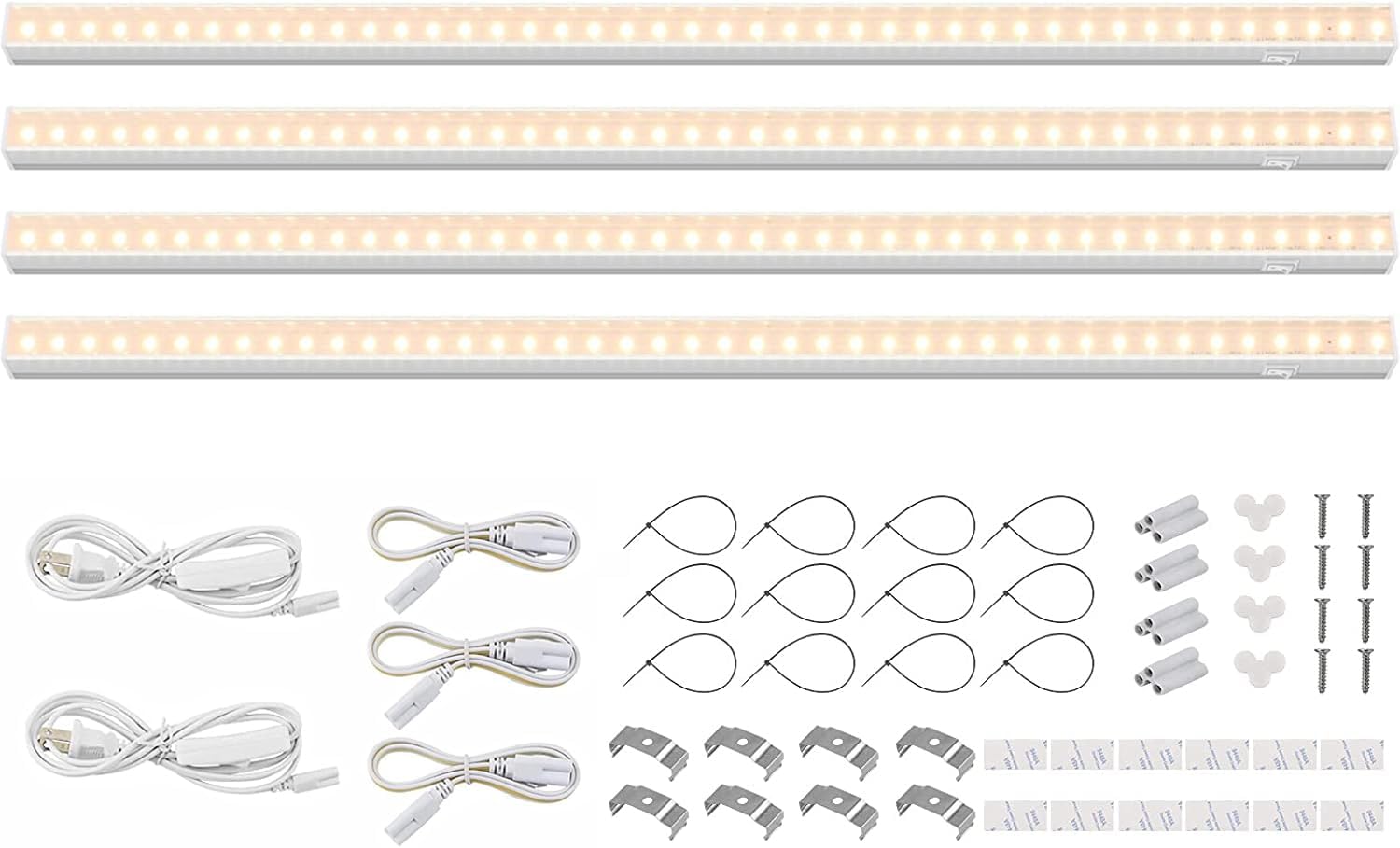
Each strip measures 24 inches and puts out roughly 2000 lumens at a color temperature around 6500K. The full spectrum includes red and blue LEDs mixed with white, though Barrina doesn’t publish detailed spectrum charts like premium brands do.
The mounting system uses simple clips that attach to shelving or hang from chains. Each strip has its own on/off switch and can link to others via included connecting cables. The whole setup plugs into a standard wall outlet with a 6-foot cord.
Build quality feels appropriate for the price. The aluminum housing dissipates heat adequately, and the LED chips are recessed behind a clear cover that protects them from moisture and contact damage.
Individual Switches Make the Difference
Most competing strip light sets force you to control all lights together. Barrina’s individual switches let you customize coverage as plants grow or move. This seemingly minor feature becomes essential when managing multiple plant types or growth stages.
The linkable design means you can daisy-chain up to 8 strips from one outlet. For larger setups, this eliminates the need for multiple timers or power strips. The connecting cables lock securely and haven’t shown connection issues in user reports.
Light Output Reality Check
Each 10W strip produces about 2000 lumens, which translates to useful light for plants within 6-18 inches. At 24 inches, the intensity drops to levels that work for low-light houseplants but won’t support vigorous growth.
This puts the Barrina strips in the supplemental lighting category rather than primary grow lights for serious cultivation. They excel at extending daylight hours for houseplants or providing adequate light for herbs and leafy greens.
For comparison, a single 24W quantum board-style light typically outperforms all four strips while using less energy. But quantum boards cost 3-4 times more and require separate drivers and mounting hardware.
Common User Experiences
Across 6,000+ reviews, the pattern is consistent: these lights work well within their limitations. Users report strong germination rates for seeds, healthy growth in herbs and lettuce, and improved performance in low-light houseplants.
The most common complaints center on durability rather than performance. Some units fail within 12-18 months, typically showing flickering or dead sections. The failure rate appears higher than premium brands but acceptable given the price difference.
Users consistently praise the ease of installation and the flexibility of individual controls. The mounting clips work on standard wire shelving, making these popular for basement growing setups and plant shelves.
Heat generation stays minimal. Multiple users report running all four strips in enclosed spaces without temperature issues, though adequate air circulation remains important for plant health.
Alternatives in This Price Range
The closest competitor is the Sunco Linkable LED Shop Light at similar pricing, but those lack the red spectrum components that benefit flowering plants. For pure growing applications, the Barrina strips offer better spectral coverage.
At double the price, Monios-L T5 strips provide better build quality and slightly higher output, but the performance difference rarely justifies the cost for casual growers.
Moving up to quantum board lights like the Spider Farmer SF-1000 costs $90+ but delivers significantly more usable light. That investment makes sense for dedicated growing but exceeds what most houseplant owners need.
Setup and Installation
Installation takes about 10 minutes with basic tools. The mounting clips accommodate shelving up to 1.2 inches thick and hold securely without additional hardware. For hanging installations, the included chains and S-hooks work adequately for lightweight applications.
The linking system requires attention to polarity – the arrows on connecting cables must align correctly. Users who ignore this detail report connection failures, but following the simple diagrams prevents issues.
Power consumption measures close to the rated 40W for all four strips, making these efficient compared to older fluorescent T5 fixtures. The lack of ballasts means no warm-up time and instant full brightness.
Performance Limitations
The 2000-lumen output per strip sounds impressive but distributes across 24 inches of length. This creates relatively low intensity compared to concentrated point sources. Plants directly under the strips receive adequate light, but coverage falls off quickly at the edges.
The spectrum weighting favors blue and white over red, which works well for vegetative growth but may limit flowering in photoperiod-sensitive plants. Users growing basil, lettuce, and similar crops report excellent results, while those attempting fruiting plants see less success.
Heat sinks are minimal, relying on the aluminum housing for cooling. This works fine at the rated power levels but leaves no headroom for overdriving or extended life under high ambient temperatures.
Who Should Buy These
These strips make sense for several specific situations. Houseplant owners dealing with insufficient window light will see dramatic improvements in plant health and growth rate. The low heat output allows close placement to foliage without burning.
Seed starting setups benefit from the even light distribution and gentle intensity. The individual switches let you customize lighting as seedlings develop different requirements.
Kitchen herb gardens work particularly well with this setup. The clean appearance and low profile integrate better than traditional grow lights in living spaces, while providing adequate light for culinary herbs.
Who Should Look Elsewhere
Serious growers cultivating flowering plants or high-light vegetables need more intensity than these strips provide. The investment in higher-powered lights pays off in better yields and faster growth cycles.
Commercial operations or anyone growing for profit should prioritize efficiency and longevity over initial cost. Premium lights deliver more photons per watt and typically last 2-3 times longer.
Users needing coverage areas larger than 4-6 square feet will find the strip format inefficient compared to panel-style lights that concentrate output.
Long-term Considerations
The typical lifespan appears to be 12-24 months with regular use, based on user reports. This shorter life cycle means replacement costs that may exceed the savings from the low initial price.
LED degradation follows expected patterns, with output dropping gradually over time rather than sudden failure. Most users report satisfactory performance throughout the useful life, with noticeable dimming starting around the 18-month mark.
The simple construction means no field repairs when failures occur. The low individual cost makes replacement more practical than repair attempts.
For guidance on proper light placement and usage, check our comprehensive guide on how to use grow lights for indoor plants and LED grow light distance charts.
The Bottom Line
The Barrina T5 4-pack delivers functional growing performance at an entry-level price. The individual switches, linkable design, and adequate light output make this a solid choice for houseplant supplementation and small-scale herb growing.
These aren’t the most efficient or longest-lasting lights available, but they solve the right problems for their intended audience. Buyers who understand the output limitations and match their expectations accordingly will find good value here.
Skip these if you need serious growing power or plan commercial cultivation. But for extending daylight hours, supporting houseplants, or getting started with indoor growing, the Barrina strips offer a practical entry point without major compromises.
At this price point, the risk is low enough to justify trying them for most casual applications. Just don’t expect performance that matches lights costing three times as much.