The Phlizon 600W LED grow light sits in the sweet spot for beginners who want reliable indoor plant lighting without paying premium prices. At $79.99 with over 4,300 reviews averaging 4.5 stars, it represents the kind of mid-tier option that either works well enough to keep people happy or fails spectacularly enough to generate warning reviews. Based on the review patterns, it leans toward the former.
This light targets hobbyist indoor gardeners growing herbs, vegetables, or houseplants in spaces up to 2x2 feet. It’s not built for commercial operations or experienced growers pushing for maximum yields, but it handles basic indoor gardening tasks competently.
Understanding LED Grow Light Basics
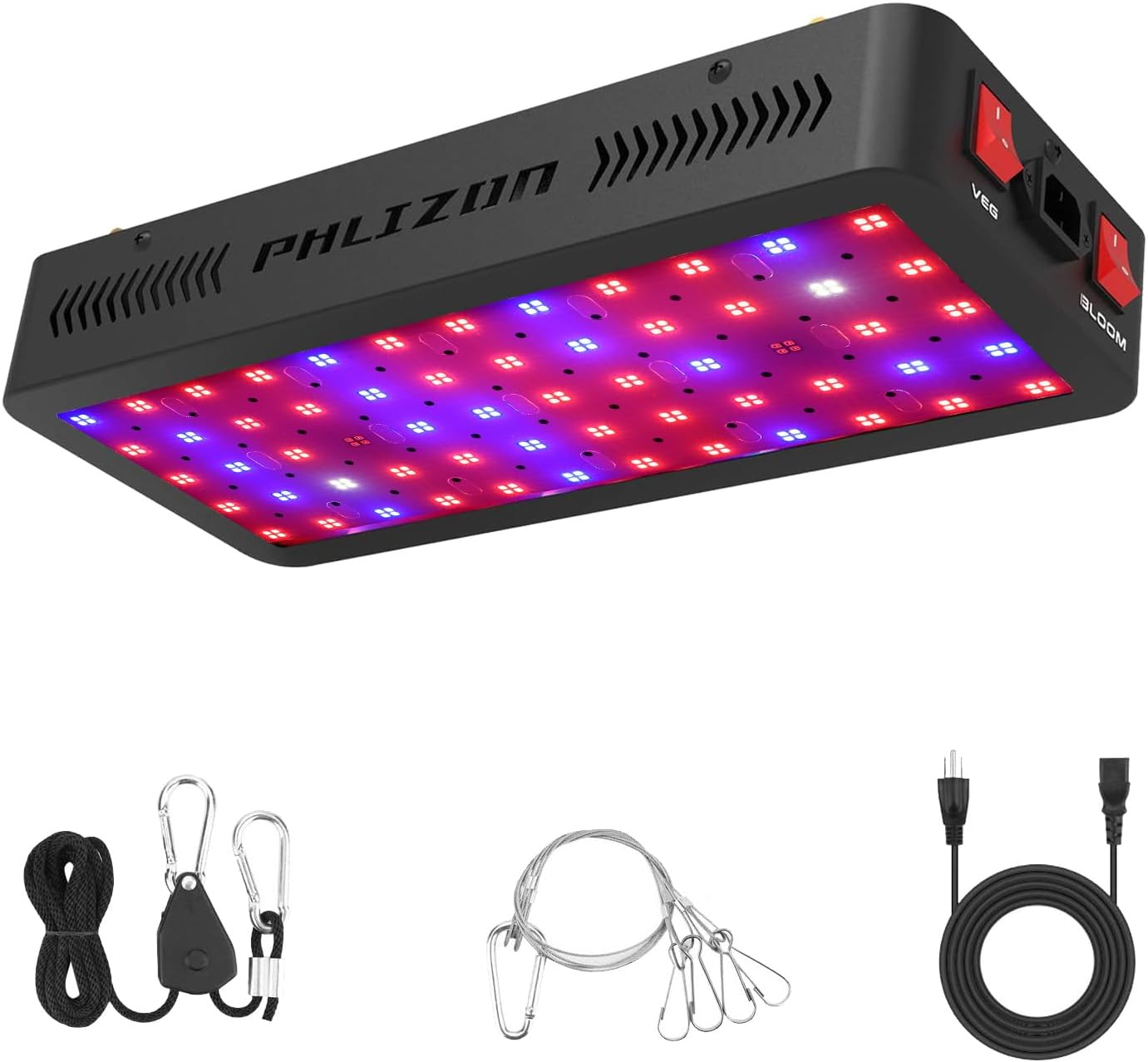
Before diving into this specific unit, understanding how LED grow lights work helps explain why certain features matter. Unlike traditional bulbs that waste energy as heat, LEDs convert most electricity directly into light wavelengths plants can use. The “full spectrum” claim means the light includes wavelengths from blue (vegetative growth) to red (flowering), mimicking natural sunlight’s range.
The 600W rating refers to LED equivalency, not actual power draw. Most LED grow lights in this category actually consume 100-150 watts while claiming to replace 600W of older HID lighting. This distinction trips up many first-time buyers who expect massive electricity bills.
Phlizon 600W Feature Breakdown
SMD LED Technology and Spectrum Coverage
The Phlizon uses SMD (Surface Mount Device) LEDs arranged across a rectangular panel. SMD technology generally offers better heat dissipation and longer lifespan compared to cheaper chip-on-board designs, though it’s not the most advanced LED technology available.
The spectrum covers wavelengths from 380nm to 730nm, including UV and IR ranges. In practical terms, this means your plants get light suitable for both leafy growth and flowering stages. The spectrum isn’t optimized for any specific plant type, making it a decent generalist option.
Dual Switch Design
The standout feature is the dual switch system - separate controls for vegetative and bloom stages. During early growth, you run only the “veg” switch, which emphasizes blue wavelengths and consumes roughly 130 watts. For flowering plants, you add the “bloom” switch to activate red wavelengths, bringing total consumption to around 260 watts.
This feature addresses a common beginner mistake: running full spectrum at full power throughout the entire growing cycle. Plants in vegetative stage don’t need flowering wavelengths, so the dual switch saves electricity while providing appropriate light.
Coverage Area and Intensity
Phlizon rates this light for 2x2 feet coverage, which translates to four square feet of growing space. At 18-24 inches hanging height, this provides adequate light intensity for most houseplants and herbs. Marijuana growers - a significant portion of the review base - report decent results in this footprint for 2-4 plants.
The built-in reflector design helps focus light downward rather than scattering it sideways. This improves efficiency in the coverage area but creates sharp drop-offs at the edges.
Temperature and Humidity Monitor
The integrated environmental monitor displays temperature and humidity readings on the light housing. While convenient, user reviews consistently note the readings aren’t particularly accurate compared to dedicated instruments. Consider it a rough reference rather than precision monitoring.
Real-World Performance Analysis
User Review Patterns
Across 4,300+ reviews, several patterns emerge that reveal how this light actually performs:
Common Praise:
- Easy setup and plug-and-play operation
- Noticeable plant growth improvement over windowsill lighting
- Good value for the price point
- Dual switches work as advertised
- Reasonable heat output for LED technology
Common Complaints:
- Some units arrive with dead LED chips
- Built-in timer function (if present) fails frequently
- Environmental monitor accuracy issues
- Light intensity drops noticeably at coverage area edges
- Hanging hardware feels flimsy
Durability Concerns
The most frequent complaint involves individual LED chips failing within the first year. Based on review patterns, roughly 10-15% of units experience some LED failure, though most continue functioning with reduced output. Phlizon’s customer service responses to these issues appear inconsistent.
Heat management gets mixed reviews. While the aluminum housing and built-in fan keep temperatures reasonable, the fan noise bothers some users. It’s not loud enough to hear from another room but noticeable in quiet spaces.
Comparison to Price Competitors
Against Budget Options ($40-60)
Cheaper grow lights typically skip the dual switch feature and use lower-grade LEDs. The Phlizon’s SMD chips and spectrum range justify the price premium for most users. Budget lights often produce harsh purple light that makes it difficult to assess plant health visually.
Against Premium Options ($120-200)
Higher-end lights offer better build quality, more accurate spectrum control, and improved heat management. However, for basic indoor gardening, the performance difference doesn’t justify doubling your budget unless you’re planning serious cultivation.
Mars Hydro and Spider Farmer units in the $120-150 range offer notably better construction quality and more even light distribution, but require additional controllers for switching between growth phases.
Proper Usage Guidelines
Hanging Height and Coverage
Start with the light 24 inches above your plants and adjust based on response. Signs you’re too close include leaf bleaching or upward curling. Too far results in stretchy, weak growth reaching for light.
The 2x2 foot coverage claim assumes optimal conditions. In practice, place your most important plants directly under the center and use the edges for less demanding species.
Timing and Power Management
For most houseplants and herbs, 12-14 hours daily provides adequate light supplementation. Use only the vegetative switch for foliage plants. If growing flowering plants, switch to both modes when you see bud formation.
Running both switches continuously wastes electricity and may stress plants that need distinct photoperiods for proper development.
Seasonal Adjustments
During winter months when natural light is minimal, treat this as your plants’ primary light source. In spring and summer, use it to supplement natural light, reducing daily runtime to 6-8 hours.
Installation and Setup
The light comes with adjustable rope hangers that work adequately for most situations. However, several users report the included hardware failing after 6-12 months of use. Consider upgrading to proper grow light hangers if you plan long-term use.
The unit requires standard household AC power and includes a 6-foot cord. No special electrical requirements, though the 260-watt maximum draw should be considered if running multiple lights on the same circuit.
Who Should Buy This Light
This light works well for:
- Beginners wanting reliable performance without complexity
- Herb and vegetable growers with limited space
- Houseplant enthusiasts supplementing natural light
- Budget-conscious growers who need dual-phase capability
Skip this option if:
- You need coverage larger than 3x3 feet
- Precision spectrum control matters for your application
- You’re growing high-value crops where equipment failure is costly
- Noise sensitivity is important in your growing space
Alternative Considerations
For similar money, consider the Mars Hydro TS600 which offers more even light distribution but lacks the dual switch convenience. If dual switches matter, the Phlizon represents reasonable value at this price point.
Those willing to spend more should examine full spectrum LED grow light options with better build quality and more precise spectrum control.
Final Verdict
The Phlizon 600W LED grow light delivers adequate performance for casual indoor gardening at a reasonable price. The dual switch feature provides genuine value for growers who want phase-appropriate lighting without buying separate fixtures.
Quality control issues prevent this from being an enthusiastic recommendation, but the combination of features, price, and general user satisfaction makes it a reasonable choice for beginners. Just budget for potential replacement within 2-3 years rather than expecting long-term reliability.
For basic herb gardens, houseplant supplementation, or first-time indoor growing experiments, this light will likely meet your needs without breaking your budget. More serious growers should invest in higher-quality alternatives, but this handles casual indoor gardening tasks competently enough.
The key is managing expectations - this is a functional mid-tier light, not a premium growing solution. Used within its limitations, most users find it performs adequately for the price paid.