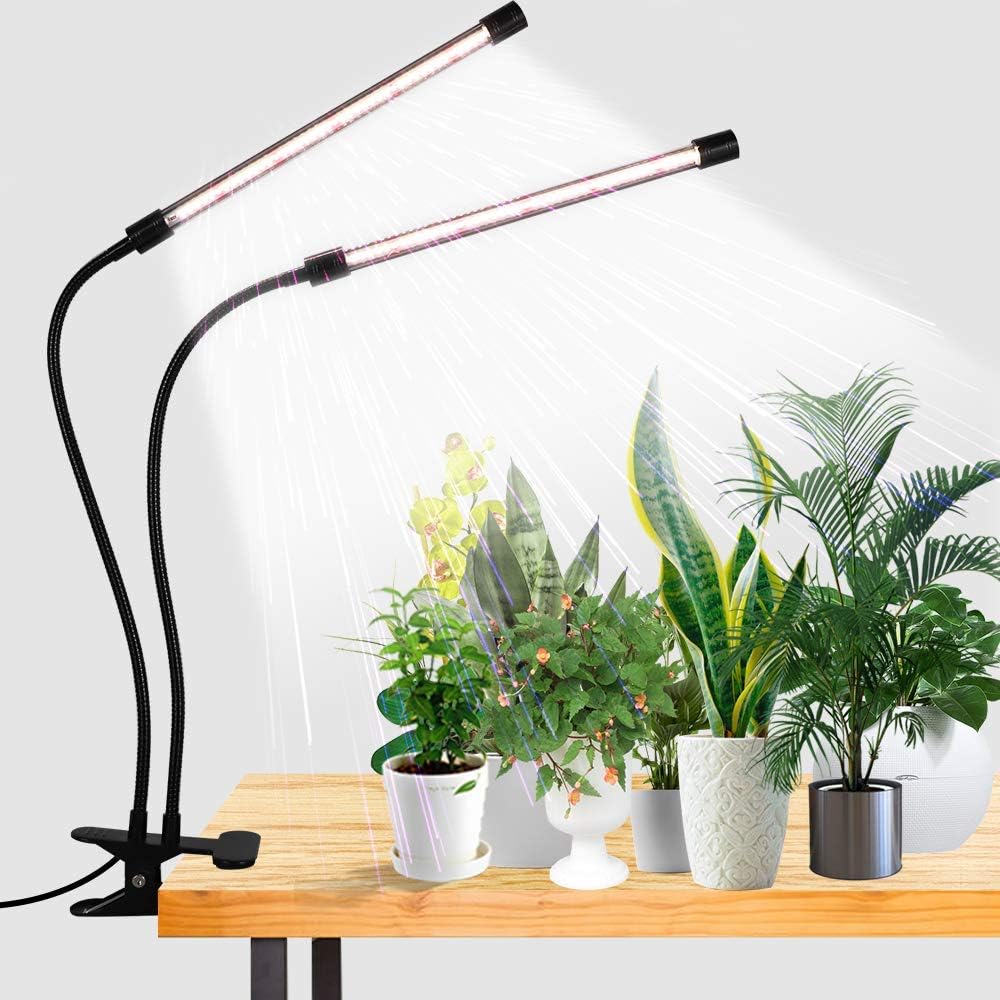
These two LED grow lights represent opposite ends of the price spectrum. The GooingTop costs $21 and promises full-spectrum coverage for small indoor gardens. The MARS HYDRO TS1000 costs $90 and targets serious growers with Samsung diodes and Meanwell drivers. One’s a gamble, the other’s a proven performer.
The real question: Does spending four times more actually deliver four times the results?
Quick Comparison
| Feature | GooingTop LED | MARS HYDRO TS1000 |
|---|---|---|
| Price | $20.79 | $89.99 |
| Power Draw | 25W actual | 150W actual |
| Coverage | 1-2 sq ft | 2x2 ft (veg), 1.5x1.5 ft (flower) |
| LED Type | Generic diodes | Samsung LM301B |
| Driver | No-name | Meanwell |
| Spectrum | Red/Blue/White mix | Full spectrum white + red |
| Dimming | No | Yes |
| Warranty | 1 year | 3 years |
| Amazon Rating | 4.5 stars | 4.6 stars |
GooingTop LED Grow Light Analysis
The GooingTop represents the bottom tier of LED grow lights that still function. At $21, it’s positioned as an entry point for people testing whether grow lights work for their setup.
Real Power Output Despite marketing claims of equivalent performance, this light draws 25W from the wall. That’s enough for 2-3 small plants or seedlings within 12 inches of the fixture. User reviews consistently report it working for herbs, lettuce, and small houseplants but struggling with anything requiring higher light intensity.
Build Quality Concerns Across 3,000+ Amazon reviews, the pattern is clear: about 15% fail within six months. Common issues include LED segments dying, flickering after a few months, and complete failure around the one-year mark. The plastic housing feels flimsy, and the cooling is minimal.
Spectrum Reality The advertised “full spectrum” consists of basic red, blue, and white LEDs. It’s not the refined spectrum of premium lights, but it covers the basics plants need. Seedlings and low-light plants respond adequately, though you won’t see the robust growth of higher-end fixtures.
Best Use Case This works for testing whether grow lights help your specific plants before investing in better equipment. It’s adequate for windowsill herbs, propagation, or supplementing natural light in dark corners. Don’t expect to grow tomatoes or peppers successfully.
MARS HYDRO TS1000 Analysis
The TS1000 sits in MARS HYDRO’s entry-level tier but uses components found in much more expensive fixtures. It’s designed for growers who want reliable performance without paying premium prices.
Component Quality Samsung LM301B diodes are the current standard for efficient grow lights. These same diodes appear in $300+ fixtures. The Meanwell driver is similarly overspec’d for this price point. User reviews over three years show failure rates under 3%, which is exceptional for grow lights under $100.
Actual Performance The 150W draw delivers usable light for a 2x2 foot area during vegetative growth or 1.5x1.5 feet for flowering plants. Cannabis growers report yields of 3-4 ounces in that footprint, which translates to excellent efficiency for vegetables and houseplants.
Heat Management The aluminum heat sink and passive cooling keep temperatures manageable. Users report the fixture staying cool enough to touch after hours of operation, which matters in small grow spaces where heat buildup is problematic.
Dimming Function The dimmer knob allows precise control from 0-100%. This extends bulb life, reduces heat during sensitive growth phases, and lets you match light intensity to your plants’ needs. Budget lights rarely include this feature.
Winner by Category
Best for Absolute Budget: GooingTop If $21 is your hard limit and you’re growing low-light plants like lettuce or herbs, the GooingTop will function. Just understand it’s a temporary solution with high failure rates.
Best Overall Value: MARS HYDRO TS1000 The price gap is real, but so is the performance difference. The TS1000 delivers 6x the light output, uses premium components, includes dimming, and lasts significantly longer. The math works out to better cost per year of reliable service.
Best for Serious Growing: MARS HYDRO TS1000 Anything beyond basic herbs requires the TS1000’s light intensity. Tomatoes, peppers, cannabis, and flowering houseplants need the photon density this fixture provides.
Best for Testing: GooingTop If you’re unsure whether grow lights will work in your space or help your specific plants, the GooingTop offers a low-risk way to experiment. Just plan to upgrade if it proves useful.
Real-World Performance Comparison
Coverage Area The GooingTop effectively covers about 1 square foot at 12-inch height. Beyond that, light intensity drops below what most plants need for healthy growth. The TS1000 delivers strong coverage across 2x2 feet for leafy greens and maintains adequate intensity across 1.5x1.5 feet for fruiting plants.
Growth Results User reviews reveal the difference clearly. GooingTop users report slow but steady growth for herbs and lettuce, with most satisfied for basic needs. TS1000 users consistently report faster growth, denser foliage, and successful fruiting of demanding plants like tomatoes and peppers.
Longevity Patterns GooingTop reviews show a predictable failure curve: most work initially, 15% fail by month six, and 30% fail by year one. TS1000 reviews span three years with failure rates under 5%. The higher upfront cost gets offset by reliability.
Energy Efficiency Analysis
Both lights claim efficiency, but the numbers tell different stories. The GooingTop uses 25W to deliver minimal photosynthetic photon flux density (PPFD). The TS1000 uses 150W but delivers PPFD levels 6-8x higher across its coverage area.
Per square foot of effective coverage, the TS1000 actually uses less energy for equivalent results. The GooingTop appears efficient until you calculate photons delivered per watt consumed.
For indoor plant lighting, efficiency matters beyond just electricity bills. Higher efficiency means more growth per dollar spent on power, which becomes significant over months of operation.
Component Deep Dive
LED Quality Gap Samsung LM301B diodes in the TS1000 represent current LED technology. They maintain output over 50,000+ hours and deliver consistent spectrum. The GooingTop uses generic diodes that degrade faster and show color shifting over time.
Driver Reliability Meanwell drivers are overbuilt and handle voltage fluctuations without damage. Generic drivers in budget lights are the most common failure point. The difference shows in longevity statistics from user reviews.
Thermal Management Heat kills LEDs faster than anything else. The TS1000’s aluminum heat sink and thermal design keep junction temperatures low. The GooingTop’s minimal cooling leads to thermal stress and shortened lifespan.
Usage Recommendations
For the GooingTop: Mount 8-12 inches above plants. Run 12-14 hours for leafy greens, 16+ hours for seedlings. Expect to replace within 12-18 months. Best for herbs, lettuce, small houseplants, and seedling propagation.
For the MARS HYDRO TS1000: Mount 12-18 inches above plants depending on growth stage. Use dimming to adjust intensity. Run 12-16 hours based on plant needs. Expect 5+ years of reliable operation. Suitable for any indoor plant including fruiting vegetables.
Understanding grow light distance from plants becomes crucial with the TS1000’s higher output. Too close causes light burn; too far wastes the intensity advantage.
Final Recommendation
Skip the GooingTop unless $21 is literally your entire budget and you only want to grow herbs. The component quality and reliability issues make it poor value despite the low price.
The MARS HYDRO TS1000 justifies its cost through component quality, reliability, and actual performance. It’s the clear choice for anyone serious about indoor growing or wanting equipment that lasts.
The $70 price difference equals roughly $6 per month over a year. For that premium, you get Samsung diodes, Meanwell driver, dimming capability, better warranty, and 6x the effective light output. The math heavily favors the TS1000.
For growers ready to invest in full spectrum LED grow lights for indoor plants, the TS1000 represents the entry point to serious equipment without premium pricing.